SSEG (Small-Scale Embedded Generation) is the legal name for a grid-connected home solar installation in South Africa. Regulations sit with NERSA, the Electricity Regulation Act, NRS 097-2-1, and your local distributor — which in practice is either a municipality or Eskom. The Western Cape and Gauteng attract the most residential solar interest, but they do not share one application clock or one portal.
This guide compares municipal requirements and typical timelines in the two provinces, then helps you diagnose whether an inverter fault code or a rejected application is a basic reset — or whether you need a site assessment.
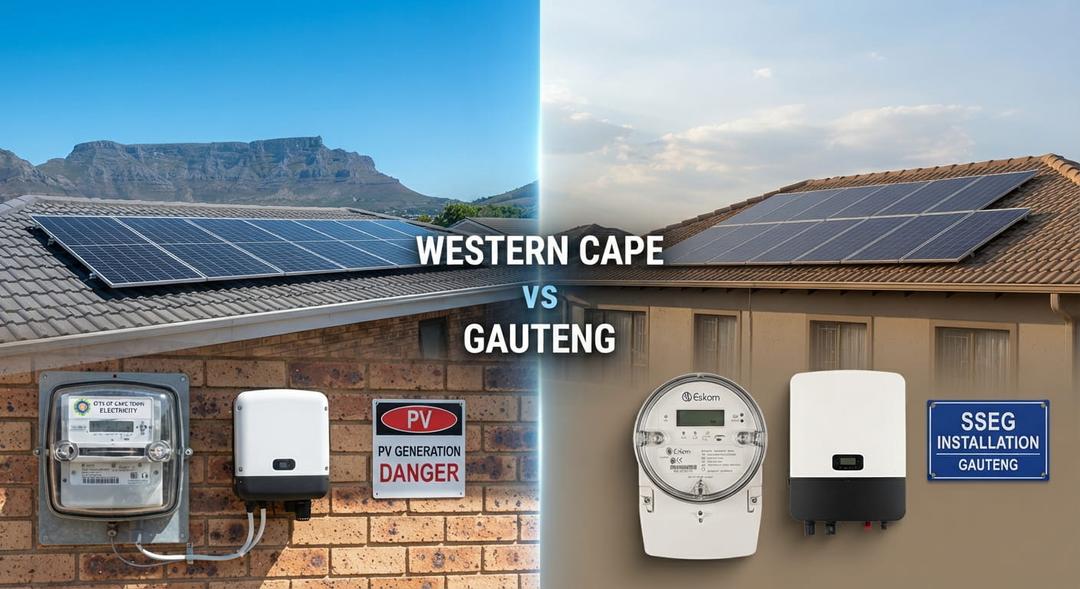
Figure 1 (suggested hero): A completed rooftop SSEG array beside a municipal meter kiosk — use a Cape Town or Gauteng suburban home, not a stock desert solar farm.
First check: municipality or Eskom?
Before you download a City of Cape Town or City Power form, read the distributor on your electricity account. A Constantia or Rondebosch erf is usually City of Cape Town. A Midrand, Sandton, or Centurion address may be City Power, Tshwane, or Eskom. Filing the wrong pack is the most common reason an SSEG application sits untouched for weeks.
National regulations still apply everywhere:
- Grid-tied and hybrid systems must be registered before they are energised, even if you never intend to export.
- Inverters must be NRS 097-2-1 certified with anti-islanding.
- A DoEL-registered electrician must issue a Certificate of Compliance under SANS 10142-1, including the embedded-generation requirements.
- A pure off-grid plant that is physically isolated from the grid follows a different path (see our off-grid vs hybrid and Eskom SSEG guides).
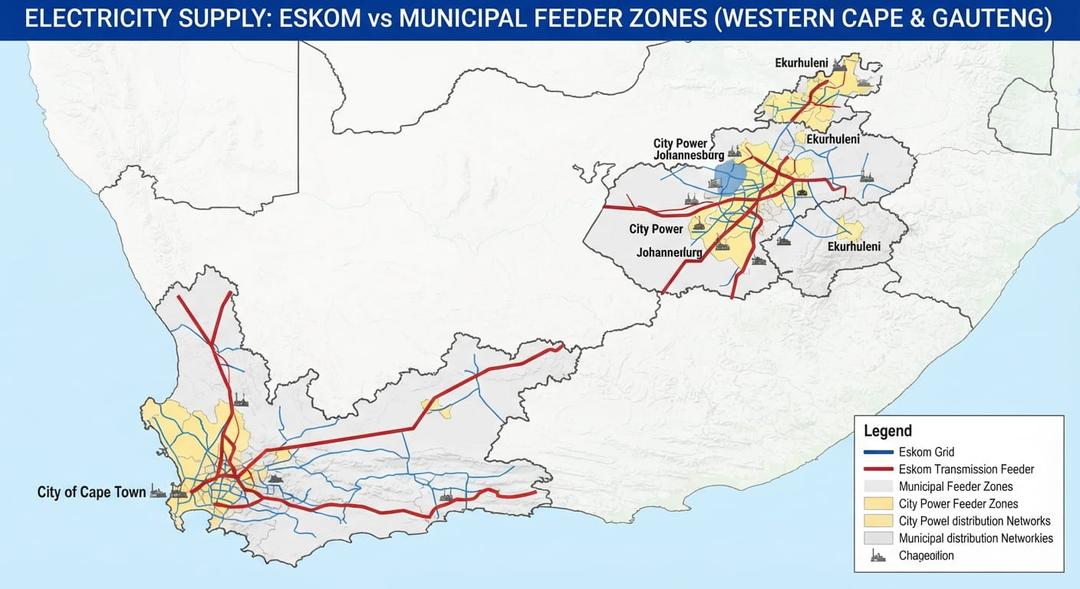
Figure 2 (suggested): A simple two-province map highlighting municipal vs Eskom supply areas — useful for SEO around Eskom, Gauteng, and Western Cape SSEG.
Western Cape: Cape Town as the benchmark
The City of Cape Town runs the most mature municipal SSEG process in the country. New authorisations go through e-Services → Energy Services. Owners, electrical contractors, and installers each need an account. For many standard residential applications, a Permission to Install (PTI) letter is issued automatically.
Critical Cape Town rules for a home solar installation:
- Do not start construction until PTI is on file.
- Do not switch the inverter on until you have a Commissioning Approval letter.
- Feed-in systems require an AMI bi-directional meter (customer-funded). Non-export systems need reverse-power blocking and usually stay on the existing tariff.
- After SANS 10142-1:2026 Edition 3.3, Cape Town dropped the ECSA professional sign-off for SSEG under 100 kVA (grid-code categories A1 and A2). The CoC is still compulsory.
Other Western Cape municipalities (Stellenbosch, Drakenstein, George, Overstrand, and others) use SALGA/AMEU-style packs rather than Cape Town’s portal. Timelines are longer, but the technical regulations (NRS 097-2-1, CoC, SLD) are the same family of rules.
Cape Town’s 2025/26 residential SSEG feed-in rate is published in the municipal tariff book (about 101.23 c/kWh excluding VAT, plus a 25 c/kWh incentive, reviewed annually). Treat those figures as a snapshot — always confirm the current annexure before you model payback.
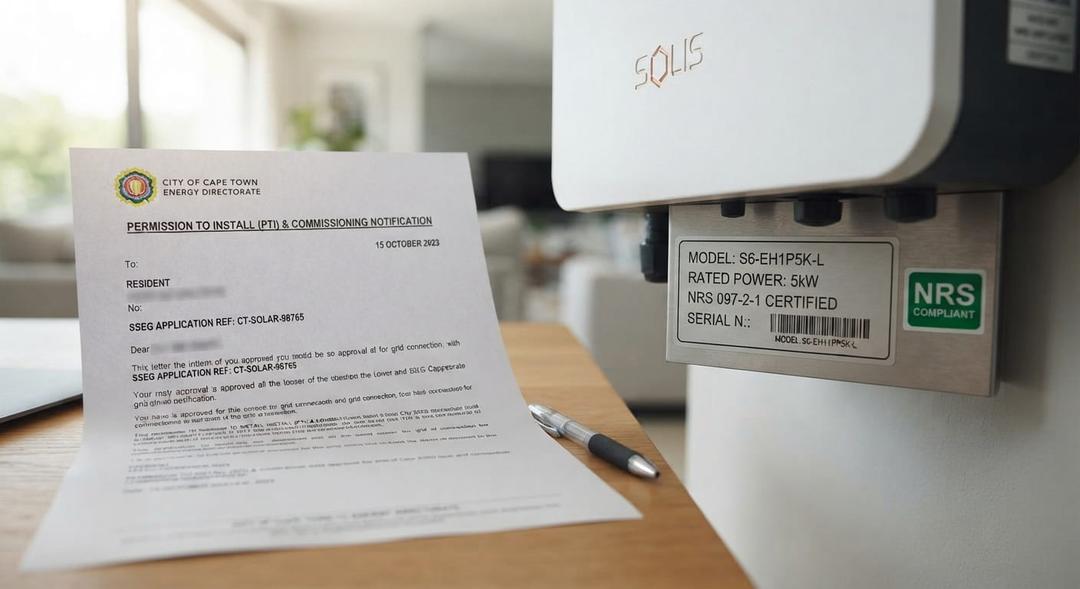
Figure 3 (suggested): Close-up of a PTI / Commissioning Approval letter on screen next to an NRS 097-2-1 inverter nameplate.
Gauteng: three metros plus Eskom
Gauteng demand for rooftop solar is high, but process maturity is uneven.
City Power (Johannesburg) uses a multi-step registration: notification number, document pack, installation only after approval, testing, CoC plus commissioning form, then a final approval letter. City Power has stated there is no SSEG registration fee and no pre-installation inspection by the utility. Grid-impact studies apply to large plants (hundreds of kVA), not a typical house. Incomplete packs — not a hidden queue — are the usual bottleneck.
City of Ekurhuleni issues a first approval to construct, then a final letter after CoC, commissioning form, safety-label photos at the municipal supply point, as-built SLD (required above 18 kW), and inverter NRS 097-2-1 proof. ECSA sign-off is generally not required below 20 kW. Export-capable sites often pay for a 4-quadrant meter.
City of Tshwane is the slowest of the three metros in installer reports. Applications are still largely manual, Single-Line Diagram expectations have been heavier than other municipalities, and industry bodies (including SAPVIA) have been pressing for a Cape Town-style digital track. Treat 10–16 weeks as a planning figure until a published SLA exists.
If Eskom supplies the erf, ignore the metro portal and use Eskom’s SSEG process. That is common on the Johannesburg northern corridor and in parts of Pretoria and the West Rand.
Side-by-side requirements
| Requirement | Western Cape | Gauteng |
|---|---|---|
| Who you apply to | Municipality in metro supply areas (City of Cape Town Energy Services is the model). Eskom CNC if you are on an Eskom feeder. | City Power, City of Tshwane, or Ekurhuleni in metro areas. Large Joburg/Pretoria pockets remain Eskom and follow Eskom SSEG, not municipal portals. |
| Application channel | Cape Town: online e-Services Energy Services. Permission to Install (PTI) is automated for many eligible systems. | |
| May you install before approval? | Cape Town: only after PTI. Do not switch the system on until Commissioning Approval is issued. | Typically wait for written permission to construct. Energising before the approval letter is treated as an illegal connection. |
| Sign-off for small rooftop SSEG | After SANS 10142-1:2026 Ed. 3.3, Cape Town no longer requires ECSA sign-off for systems under 100 kVA (A1/A2). DoEL CoC remains mandatory. | CoC from a DoEL-registered electrician is always required. Ekurhuleni generally skips ECSA below 20 kW. City Power still expects correctly issued ECSA/wireman documents where their process lists them. |
| Feed-in / export | Cape Town has a published residential SSEG feed-in tariff plus incentive; AMI (smart) meter at the customer's cost for export systems. | Export credit is metro-specific and less standardised. Reverse-power blocking is common. Meter upgrades (e.g. 4-quadrant in Ekurhuleni) are usually for the applicant's account. |
| NRS 097-2-1 inverter | Mandatory for any grid-tied or hybrid home solar installation. | Mandatory for any grid-tied or hybrid home solar installation, including Eskom-supplied erven. |
Application timelines you can actually plan around
No municipality publishes a guaranteed SLA for every file. The ranges below assume a complete first submission (correct distributor, NRS inverter, CoC electrician identified, SLD matching the intended plant). Incomplete files restart the clock.
| Stage | Western Cape | Gauteng |
|---|---|---|
| Confirm who owns the network | 1–3 days (account / meter / GIS check) | 1–7 days (City Power vs Eskom split is a common delay) |
| Complete application and documents | 3–10 days if installer, CoC electrician, and owner are on e-Services | 1–3 weeks (SLD, CoC, NRS certificates, photos of labels) |
| Permission to install / first approval | Cape Town: often days for automated PTI; 2–4 weeks if manually reviewed | City Power: about 6–12 weeks from a complete pack; Ekurhuleni: 8–14 weeks; Tshwane: 10–16 weeks |
| Install, CoC, commissioning pack | 1–5 days on site, then upload CoC and commissioning report | 1–5 days on site, then resubmit CoC, commissioning form, and dual-supply labels |
| Meter change and permission to switch on | AMI quote and install for feed-in; Commissioning Approval before energising | Bi-directional or 4-quadrant meter where export is allowed; final approval letter before energising |
| Eskom-supplied properties (both provinces) | Typically 12–20 weeks through the local CNC / self-service, same national rules | Typically 12–20 weeks; do not file a City Power pack if Eskom is the distributor |
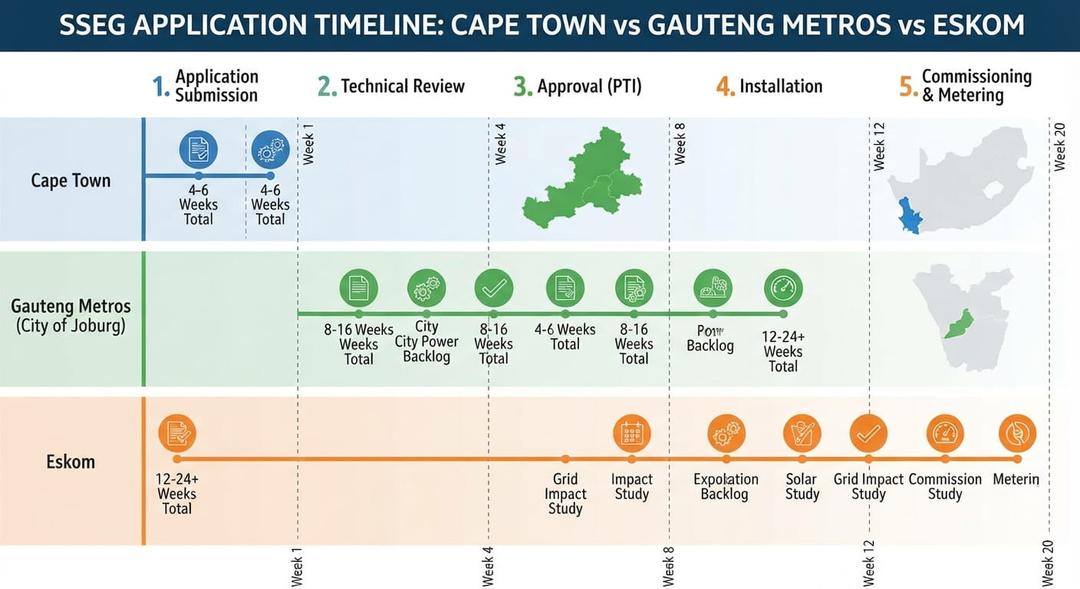
Figure 4 (suggested): Horizontal timeline infographic — Western Cape (green) vs Gauteng metros (amber) vs Eskom (grey).
Fault codes: reset the inverter, or book an assessment?
Homeowners often mix up three different “faults”: an inverter alarm, a meter tamper, and a municipal application status. Only the first is sometimes fixed with a basic reset.
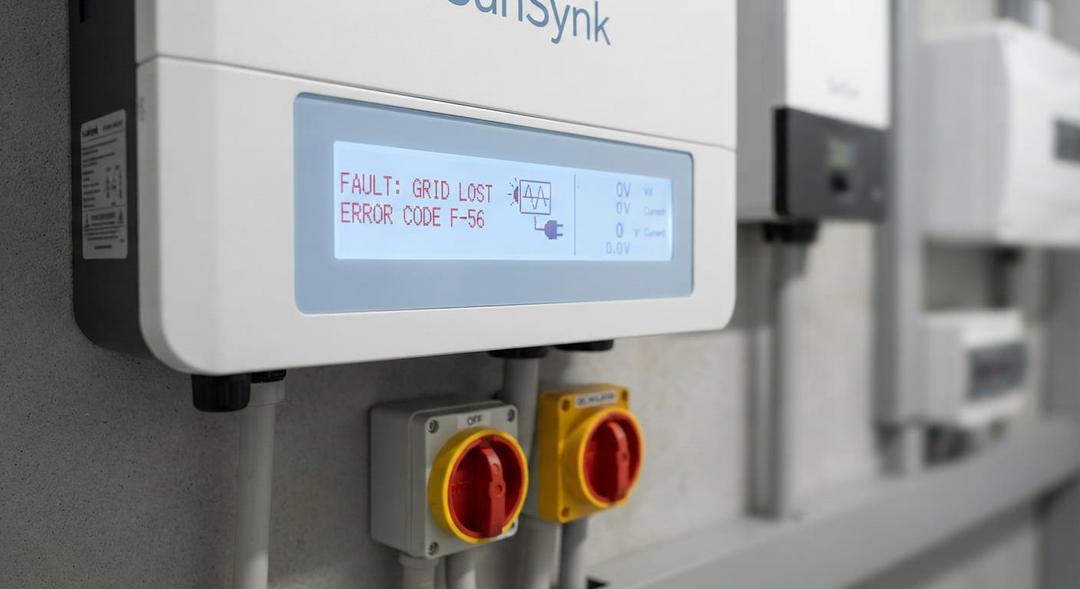
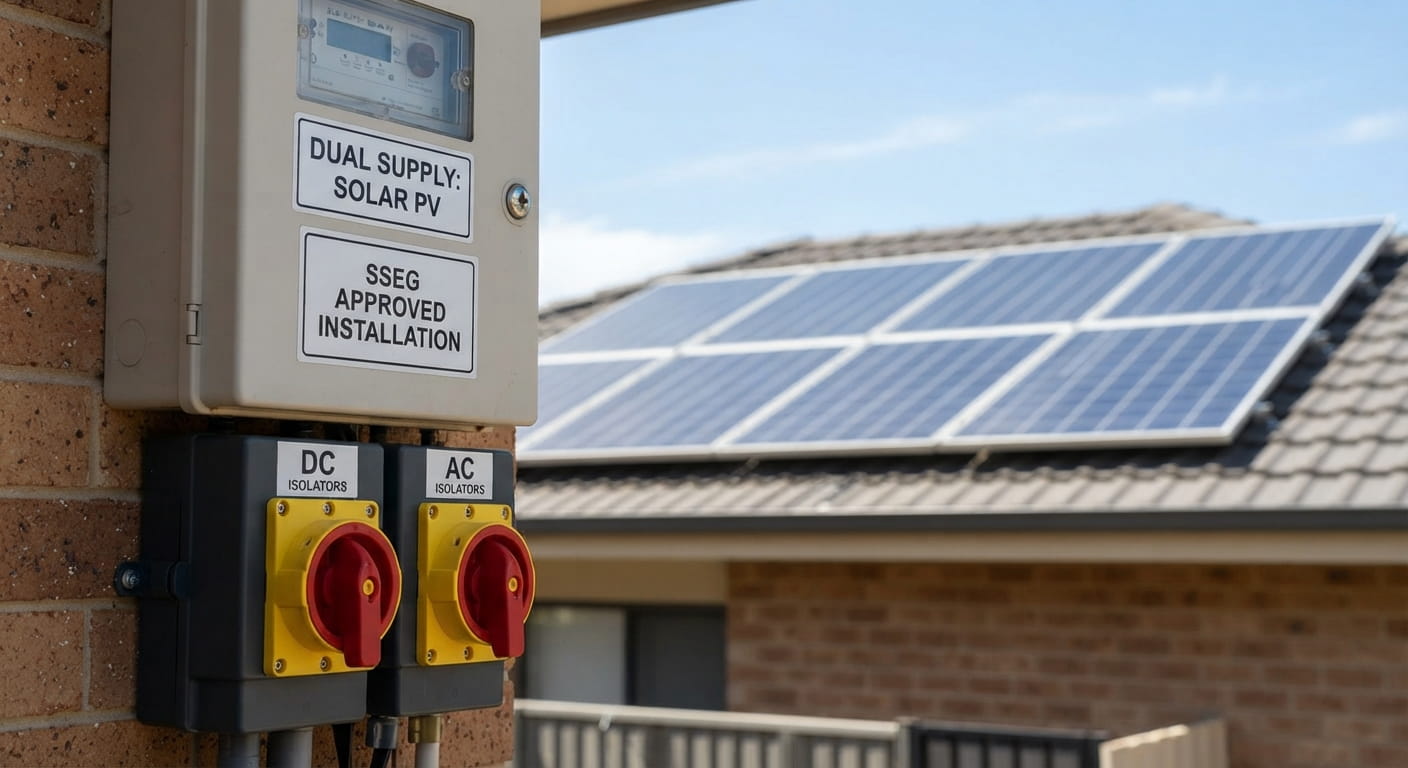
Figure 5 (suggested): Inverter display with a grid / AC fault code, isolators labelled, and a municipal meter in the same frame.
Safe checks you can try before calling a technician:
- Confirm the grid is actually up. Anti-islanding is required by NRS 097-2-1. After load-shedding the inverter must wait, then reconnect. A grid-loss code during an outage is normal.
- Cycle DC and AC isolators in the order in the inverter manual. Do not pull MC4s under load.
- Check country / grid code. A unit left on a European default will throw voltage and frequency faults on a South African feeder.
- Read the SSEG portal, not only the inverter. “Waiting on Customer” means upload documents. It is not a hardware failure.
Stop and book an assessment if reverse energy has tripped a prepaid meter, if commissioning was refused, or if insulation / earth-fault codes repeat. Those are regulations and safety issues on a live home solar installation.
| Scenario | Recommended Step | When To Book Assessment |
|---|---|---|
| Inverter shows grid-loss, islanding, or AC voltage-out-of-range after load-shedding | Power-cycle the inverter from the DC and AC isolators, confirm Eskom/municipal supply is healthy, and check NRS 097-2-1 country/grid code is set to South Africa. | If the code returns on a stable grid, or the inverter never reconnects after the anti-islanding delay. |
| Prepaid meter shows tamper / reverse energy after the solar went live | Switch the inverter off and stop export immediately. Confirm whether reverse-power blocking or an AMI/bi-directional meter was part of the SSEG approval. | Always — an unapproved reverse feed is a regulations and billing fault, not a reset. |
| Portal status is Returned, Incomplete, or Waiting on Customer | Re-read the municipality email. Upload the missing CoC, SLD, NRS 097-2-1 certificate, or service-provider registration. Do not reinstall hardware. | If the rejection cites inverter model, earthing, or SLD errors that a paperwork reset cannot fix. |
| Permission to Install granted but Commissioning Approval refused | Do not switch the plant on. Compare as-built wiring to the submitted SLD and confirm isolators, labels, and CoC annexure for embedded generation. | If the as-built system differs from the approved design or anti-islanding tests fail. |
| Ground-fault, isolation, or DC insulation alarm on first start-up | Isolate PV strings, inspect for wet connectors or damaged DC cable, then retry a controlled start only if the installer procedure allows it. | Immediately if the code repeats — this is a safety fault on a home solar installation, not a municipal form issue. |
Practical takeaway
If you are installing in Cape Town, budget for an online PTI, a hard rule against switching on early, and a published feed-in tariff if you export. If you are installing in Gauteng, first prove whether City Power, Tshwane, Ekurhuleni, or Eskom owns the feeder — that single fact changes forms, sign-off, and how many weeks you wait.
In both provinces the technical bar is the same: NRS 097-2-1 inverters, a valid CoC, and no energising until the distributor says so. Use a reset only for transient grid and settings faults. Use an assessment when the paperwork, earthing, metering, or as-built SLD is wrong.
Planning a compliant SSEG system? Contact us for a no-obligation . We're here to help.
If you know what equipment you need, please visit to search for inverters and balance-of-system parts.
for a free estimate or quote.