Navigating Eskom’s SSEG Compliance: A Step-by-Step Guide to Mandatory Solar Registration
The rapid adoption of residential and commercial solar PV systems across South Africa has transformed the national energy landscape. However, transitioning to rooftop solar involves more than mounting panels and wiring an inverter. Under South African law and utility operational standards, connecting a Small-Scale Embedded Generation (SSEG) system to the grid requires formal registration and strict compliance with Eskom regulations and national electricity frameworks.
Whether you operate a small residential rooftop array or a commercial hybrid system, understanding and executing the SSEG registration process is critical to avoiding legal penalties, unauthorized disconnects, and safety hazards for line workers.
1. The Legal Framework: Why SSEG Registration is Mandatory
Under Schedule 2 of the Electricity Regulation Act (ERA), any generation facility connected to the distribution network must comply with regulatory requirements established by the National Energy Regulator of South Africa (NERSA) and local distribution network service providers (DNSPs) such as Eskom or municipal distributors (e.g., City Power, City of Cape Town).
+-----------------------------------------------------------------------+
| ELECTRICITY REGULATION ACT (ERA) |
| Schedule 2 |
+-----------------------------------------------------------------------+
|
v
+-----------------------------------------------------------------------+
| NATIONAL ELECTRICAL CODE & GRIDS |
| NRS 097-2-1 | SANS 10142-1 Code |
+-----------------------------------------------------------------------+
|
v
+-----------------------------------------------------------------------+
| MANDATORY SSEG REGISTRATION |
| • Grid Back-feeding Control • Worker Safety |
| • DoEL Certified CoC • Approved Inverter List |
+-----------------------------------------------------------------------+
Why Eskom Mandates Registration for Grid-Tied Systems
- Preventing Uncontrolled Grid Back-Feeding: Unregistered grid-tied inverters can feedback electricity into the municipal or Eskom low-voltage (LV) grid during localized power outages or maintenance windows.
- Protecting Field Workers and Maintenance Crews: When Eskom technicians isolate a distribution transformer or power line to perform repairs, an unauthorized grid-tied inverter back-feeding into the network poses a lethal electrocution hazard to field crews (a condition known as islanding).
- Grid Infrastructure Stability: Grid operators must track total generation capacity across residential feed channels to balance transformer load limits, manage phase voltage rise, and plan infrastructure upgrades accurately.
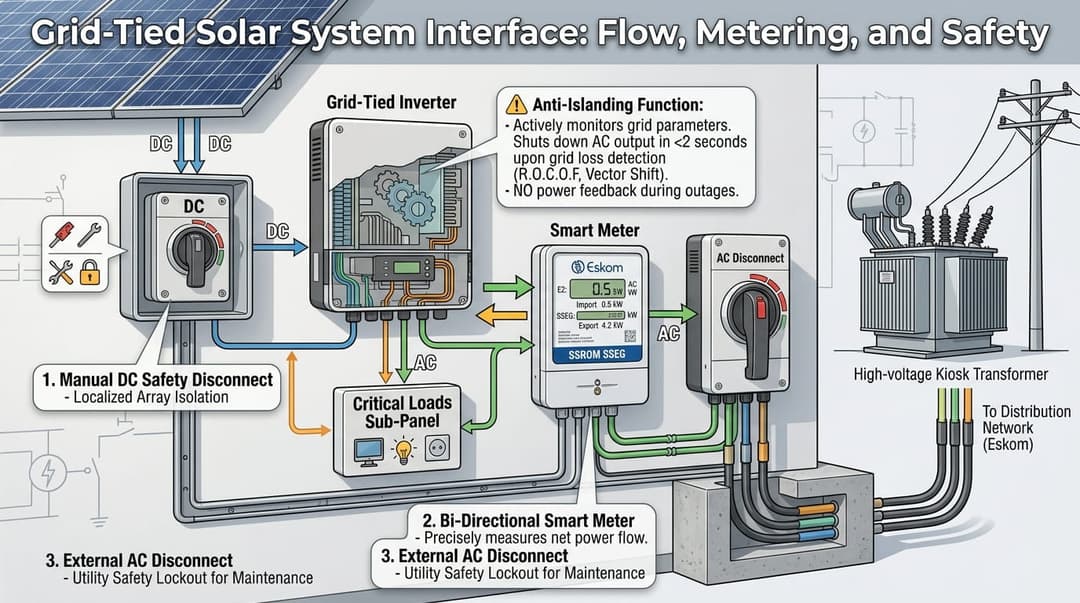
Figure 1: Safe integration of a grid-tied SSEG system, illustrating required isolation switches, bi-directional metering, and protective anti-islanding mechanisms.
2. Key Regulatory Evolution: DoEL Sign-Offs vs. ECSA Sign-Offs
Historically, property owners faced significant hurdles due to requirements demanding approval from an Engineering Council of South Africa (ECSA) registered professional engineer for residential rooftop solar sign-offs.
Recent regulatory updates have streamlined this process for standard residential installations:
- Department of Employment and Labour (DoEL) Registered Sign-Offs: For standard, off-the-shelf residential grid-tied and hybrid installations (typically under 10kVA/10kW single-phase), a qualified Registered Person (Installation Electrician or Master Installation Electrician registered with the DoEL) can inspect, test, and issue the mandatory Electrical Certificate of Compliance (CoC).
- When ECSA Sign-Off is Still Required: Commercial-scale installations, custom non-standard grid connections, or systems exceeding specific capacity thresholds (typically >100kVA or custom MV connections) still require specialized engineering sign-offs from an ECSA-registered professional engineer.
3. Essential Documentation Checklist for SSEG Registration
To successfully register your SSEG system with Eskom, you must compile a full compliance portfolio before commissioning or final grid interconnection.
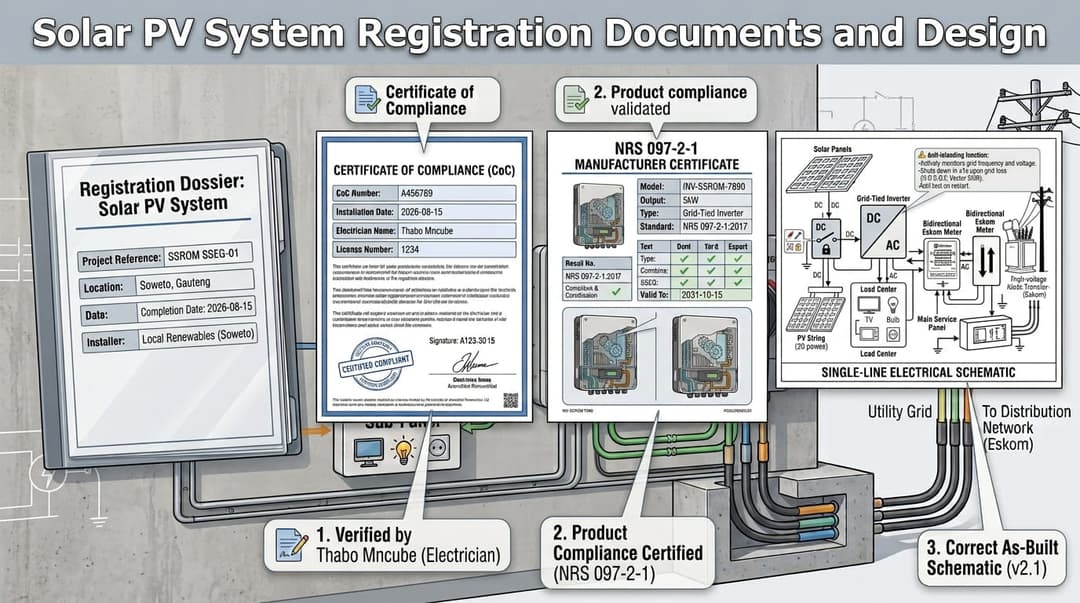
Figure 2: Complete SSEG submission documentation set required by Eskom Customer Network Centres.
Required Document Breakdown
-
Electrical Certificate of Compliance (CoC):
- Issued specifically under SANS 10142-1 (Code of Practice for the Wiring of Premises) including Section 7.12 for Embedded Generation.
- Must cover the AC side, DC isolators, surge protection devices (SPD), earthing arrangements, and roof structure bonding.
-
NRS 097-2-1 Compliant Inverter Certificate:
- Eskom maintains a strict list of approved grid-tied and hybrid inverters.
- The inverter must be independently tested and certified to comply with NRS 097-2-1 (Grid Interconnection of Embedded Generation - Part 2: Small-Scale Embedded Generation). This guarantees certified anti-islanding capabilities that instantly disconnect the inverter if grid power fails.
-
Single-Line Diagram (SLD):
- A detailed electrical schematic showing solar array configuration, DC isolator switches, inverter connection point, changeover switch, AC distribution board, main circuit breakers, and Earth Leakage protection devices.
-
Eskom SSEG Application Forms:
- Standardized application form for connection of embedded generation, including property owner details, account numbers, GPS coordinates, and technical system specifications.
The table below summarizes the key documents required for SSEG registration with Eskom:
| document | issuedBy | purpose | mandatoryFor |
|---|---|---|---|
| Electrical Certificate of Compliance (CoC) | DoEL Registered Installation Electrician | Verifies safe installation according to SANS 10142-1 standards. | All Systems |
| NRS 097-2-1 Inverter Certificate | Approved Testing Body / Manufacturer | Confirms anti-islanding and grid protection features. | Grid-Tied & Hybrid |
| Single-Line Diagram (SLD) | System Installer / Qualified Electrician | Illustrates electrical architecture, disconnects, and protective devices. | All Systems |
| Eskom SSEG Application Form | Property Owner / Designated Agent | Formal request for grid connection and capacity clearance. | Grid-Tied & Off-Grid |
4. Step-by-Step Guide to the Eskom SSEG Registration Process
[ Step 1: Pre-App Check ] ──> [ Step 2: Qualified Install ] ──> [ Step 3: Testing & CoC ]
│
[ Step 5: Meter & Approval ] <── [ Step 4: Eskom Submission ] <───────────┘
Step 1: Pre-Application Verification
Before purchasing hardware, consult the latest Eskom Approved Inverter List to confirm your intended inverter brand and exact model number hold active NRS 097-2-1 certification. Verify whether your local Eskom feeder line has capacity constraints.
Step 2: Professional Installation
Work with a accredited solar installer. Ensure all wiring complies with SANS 10142-1 requirements, including correct cable sizing, separate conduit routing for DC/AC lines, external DC isolators, and adequate battery racking and ventilation.
Step 3: System Testing & CoC Issuance
Upon physical completion, a DoEL-registered Installation Electrician performs insulation resistance tests, earthing continuity checks, and anti-islanding functional tests. Once verified, the electrician issues a formal Certificate of Compliance with the embedded generation annexure.
Step 4: Application Submission
Submit the completed application packet (Application Form, CoC, Inverter NRS Certificate, and Single-Line Diagram) to your local Eskom Customer Network Centre (CNC) or via the dedicated Eskom online self-service portal.
Step 5: Network Approval & Meter Upgrade
Eskom reviews the technical submission. Once approved, Eskom provides written permission to connect. If you participate in net-metering or export tariffs, Eskom will schedule the installation of an approved bi-directional smart meter.
The table below summarizes the key steps involved in the SSEG registration process:
| stage | action | typicalDuration |
|---|---|---|
| Phase 1: Pre-Application | Determine grid availability, select NRS 097-2-1 certified equipment, and draft Single-Line Diagram. | 1 - 2 Weeks |
| Phase 2: Installation & Inspection | Physical solar and inverter setup, followed by DoEL registered electrician inspection and CoC issuance. | 1 - 3 Days |
| Phase 3: Formal Submission | Submit complete documentation packet to Eskom Customer Network Centre (CNC) or online portal. | 2 - 4 Weeks |
| Phase 4: Metering & Sign-off | Eskom approves connection, updates network billing records, and installs bi-directional meter if exporting. | 2 - 6 Weeks |
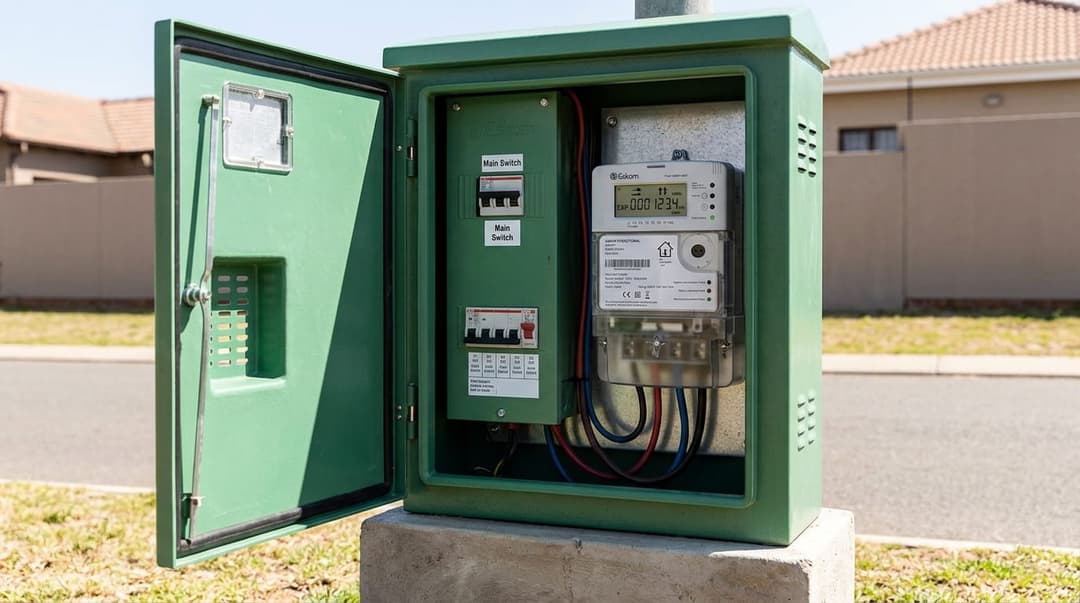
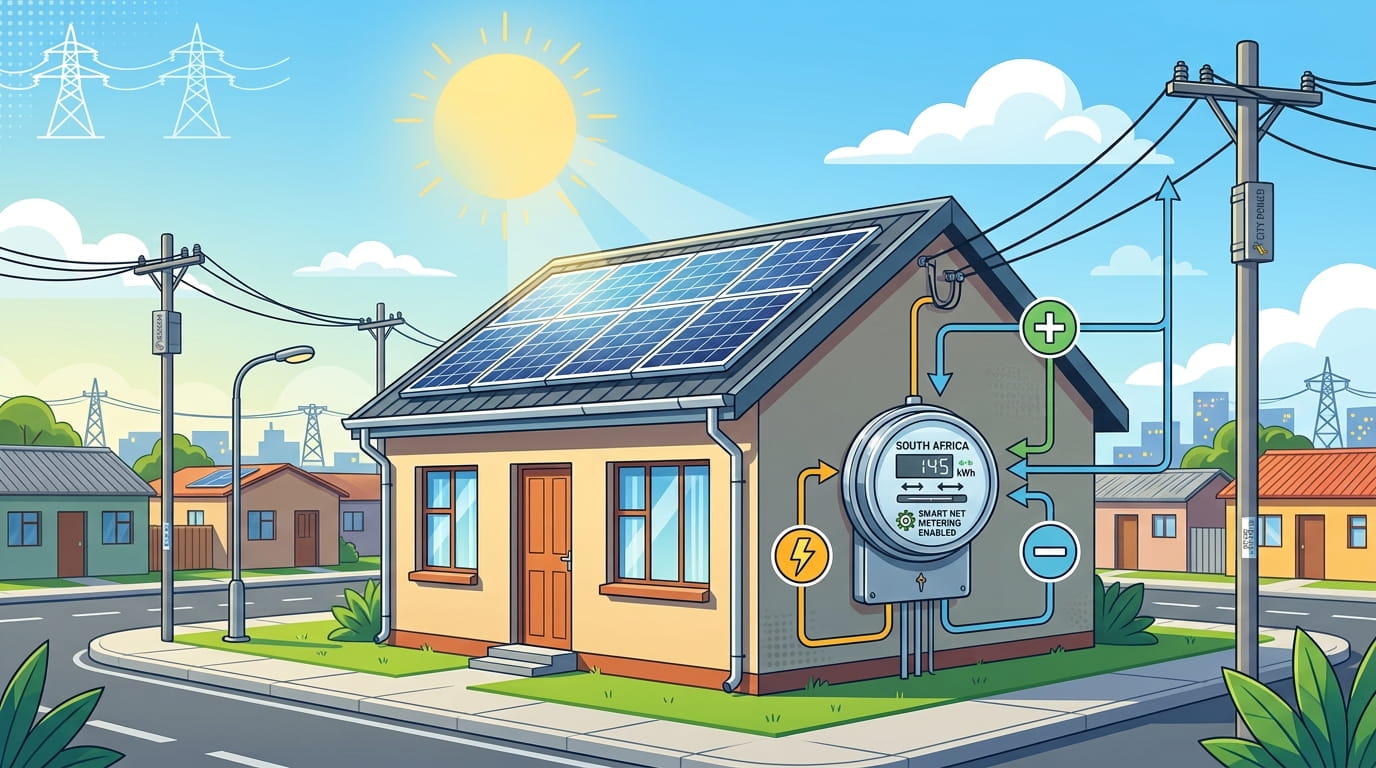
Figure 3: Bi-directional smart meter installed during final SSEG approval for property owners participating in feed-in tariff structures.
Summary & Key Takeaways
Compliance is not just a formality—it safeguards your equipment warranty, protects field engineers, preserves your property insurance eligibility, and ensures your home or business remains fully legally compliant under South Africa's evolving energy regulations.
By ensuring your system uses NRS 097-2-1 approved inverters, securing a valid DoEL Certificate of Compliance, and submitting proper Single-Line Diagrams, you can navigate Eskom's SSEG compliance seamlessly.
Would you like to consult with us regarding your home energy needs? Contact us for a no-obligation Chat. We're here to help.
If you know already have something in mind, we might have what you're looking for, please visit Tech and Bids to search for what you need.