Feeding Power Back to the Grid: How Net Metering and Smart Meters Work in SA
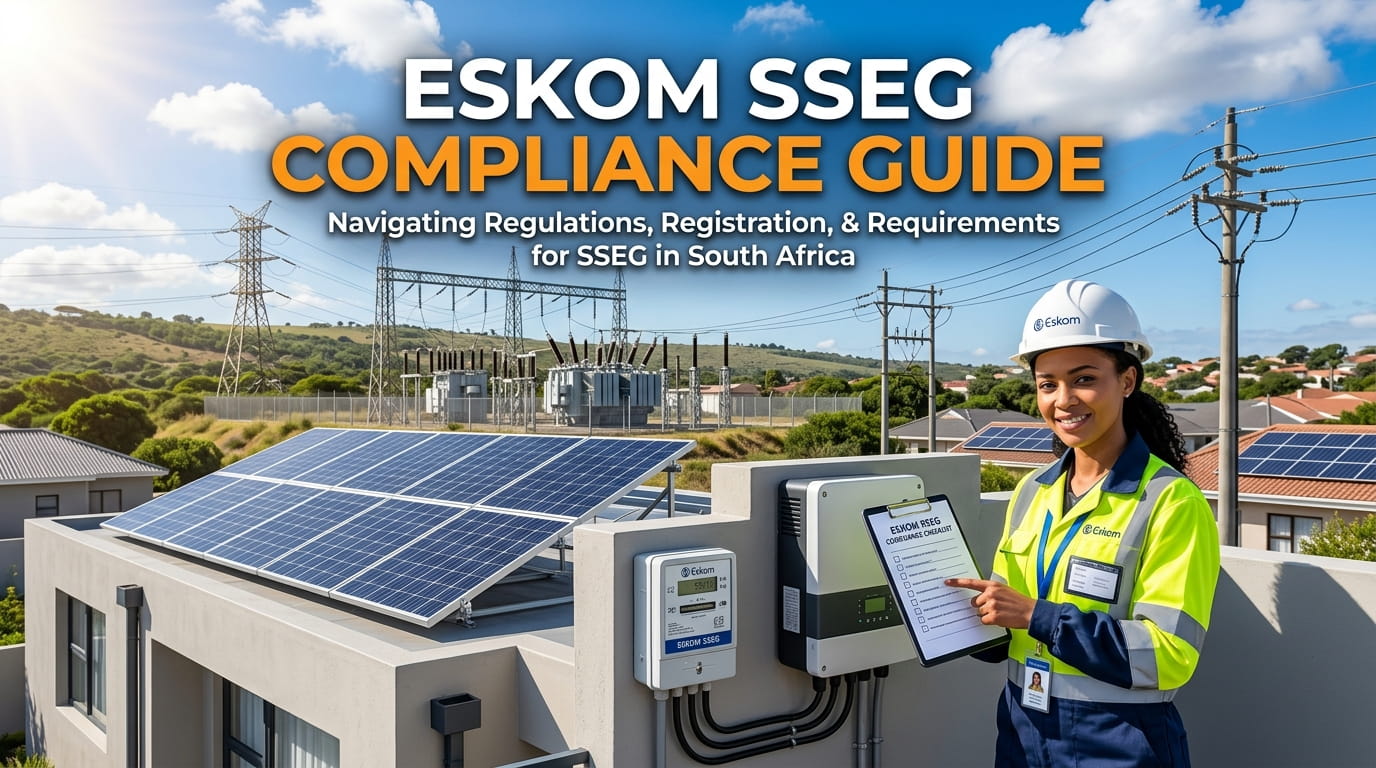
For years, South African rooftop solar installations were designed primarily for self-consumption and battery backup to weather load-shedding. However, as utility regulations evolve and Small-Scale Embedded Generation (SSEG) frameworks mature, a new frontier in residential energy strategy has emerged: Monetizing excess solar production by feeding power back into the grid.
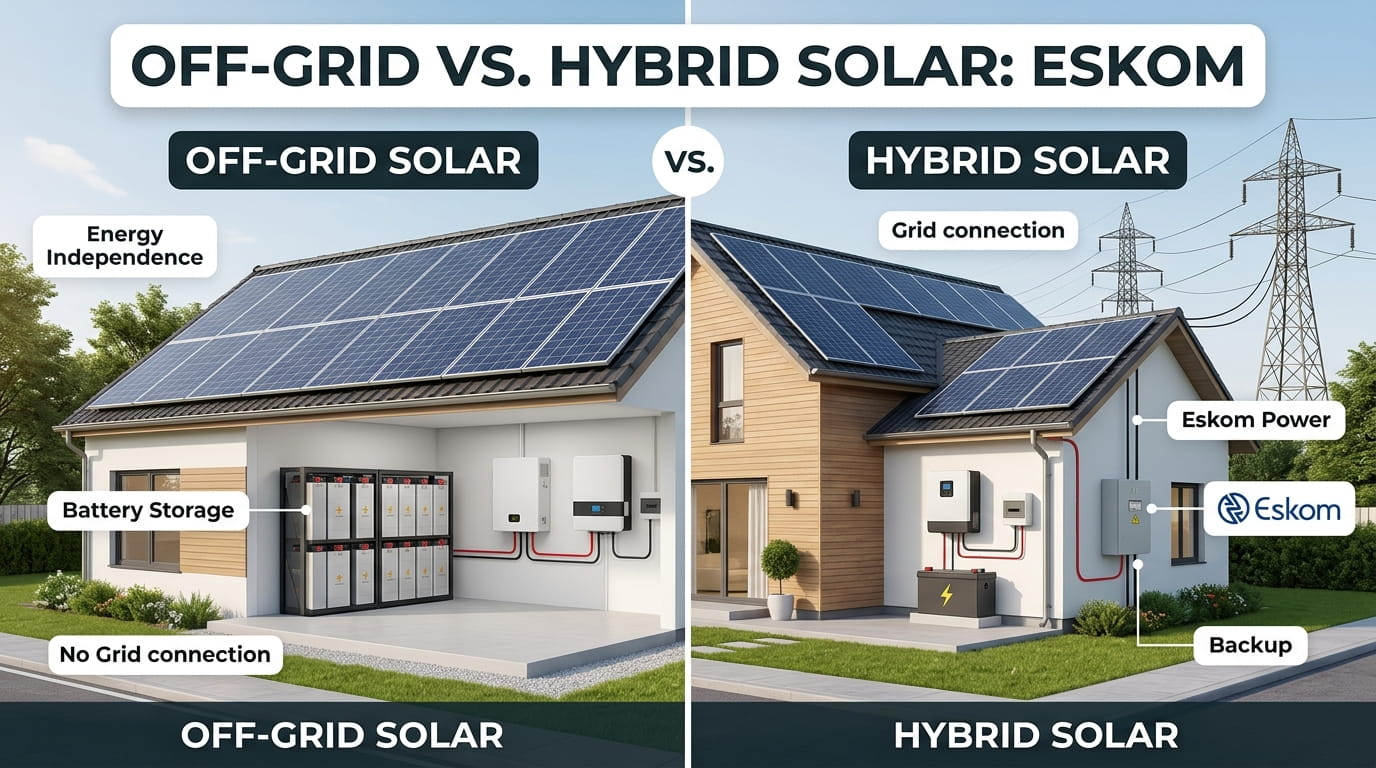
Through bi-directional smart meters and specialized feed-in tariffs (such as Eskom’s Homeflex structure and municipal feed-in programs), homeowners can convert their rooftop solar arrays into income-generating micro-power plants. This guide explains how net metering works, why replacing traditional meters is mandatory, and how grid export credits shorten solar payback periods.
1. Traditional vs. Smart Meters: Why Upgrading is Essential
Before a household can participate in net metering or feed energy back into the distribution network, the property's physical electricity meter must be upgraded as part of the formal SSEG registration process.
+------------------------------------------------------------------------+
|                      TRADITIONAL PREPAID METER                         |
|  • Single-direction measurement (Import only)                          |
|  • Treats exported solar energy as grid consumption OR triggers lockout|
+------------------------------------------------------------------------+
|
v
+------------------------------------------------------------------------+
|                     BI-DIRECTIONAL SMART METER                         |
|  • Dual-register measurement (Import kWh & Export kWh)                 |
|  • Real-time cellular telemetry back to utility billing engine        |
|  • Enables Time-of-Use (TOU) feed-in tariff calculations               |
+------------------------------------------------------------------------+
The Problem with Traditional Meters
Traditional disc-type meters or standard pre-paid keypads are strictly unidirectional. If an unregistered grid-tied inverter exports excess solar energy into a traditional pre-paid meter, the meter may interpret the reverse current in one of two undesirable ways:
- False Consumption Billing: The meter counts reverse-flowing exported energy as consumed energy, actively charging you for power you provided to the grid.
- Tamper Trip Lockout: The meter flags reverse power flow as illegal meter tampering, instantly tripping your main supply breaker and cutting off power.
How Bi-Directional Smart Meters Work
A bi-directional smart meter features two separate digital registers:
- Register A (Import): Records every kilowatt-hour (kWh) drawn from the Eskom or municipal grid during low-sun hours or high household demand.
- Register B (Export): Accurately measures every kWh generated by your solar PV panels that exceeds immediate household consumption and flows back onto the local grid.
Integrated cellular modems transmit these dual readings directly to utility billing systems, ensuring automated and precise monthly credit accounting. The table below summarizes the key features of bi-directional smart meters:
| feature | traditionalPrepaidMeter | bidirectionalSmartMeter |
|---|---|---|
| Energy Flow Capability | Unidirectional (Import Only) | Bi-directional (Import & Export) |
| Response to Solar Export | Triggers tamper lockout or charges for export | Accurately logs exported kWh credits |
| Grid Communication | Manual key-in token / Offline | Automated Cellular / PLC telemetry |
| Tariff Compatibility | Standard flat or block tariff | Time-of-Use (TOU) & Feed-in Tariffs |
| SSEG Registration Status | Non-compliant for grid back-feeding | Mandatory requirement for net metering |

Figure 1: Bi-directional smart meters feature separate internal registers to track energy drawn from the grid versus excess solar electricity fed back.
2. Understanding Net Metering and Feed-in Tariffs (e.g., Eskom Homeflex)
Net metering is an administrative and financial mechanism that offsets the cost of energy imported from the grid against the excess energy exported by your solar installation.
              +-----------------------------------+
              |         SOLAR PV PANELS           |
              +-----------------------------------+
                                |
                                v
              +-----------------------------------+
              |       HYBRID SOLAR INVERTER       |
              +-----------------------------------+
                           /         \
                          /           \
                         v             v
         +--------------------+   +---------------------+
         | HOUSEHOLD LOADS    |   | BI-DIRECTIONAL METER|
         | (Direct Daytime)   |   | (Excess Export)     |
         +--------------------+   +---------------------+
                                           |
                                           v
                                  +-----------------+
                                  | LOCAL UTILITY   |
                                  | GRID (CREDIT)   |
                                  +-----------------+
How Feed-in Tariffs Work in Practice
Under programs like Eskom Homeflex or progressive municipal tariffs (e.g., City of Cape Town's Cash for Power program):
- Daytime Exporting: During peak sunlight hours (10:00 to 14:00), your solar array generates more energy than your home requires. Once batteries are fully charged, the inverter channels surplus energy into the local grid.
- Credit Accumulation: The bi-directional meter logs these exported units. Eskom credits your monthly utility account for every exported kWh based on the approved feed-in rate.
- Evening Offset: During peak evening hours (17:00 to 21:00), when your household draws electricity from the grid, accumulated export credits offset your consumption costs.

Figure 2: Daily energy profile illustrating daytime grid exports offsetting evening grid power consumption.
3. Financial Benefits: Shortening the Solar System Payback Period
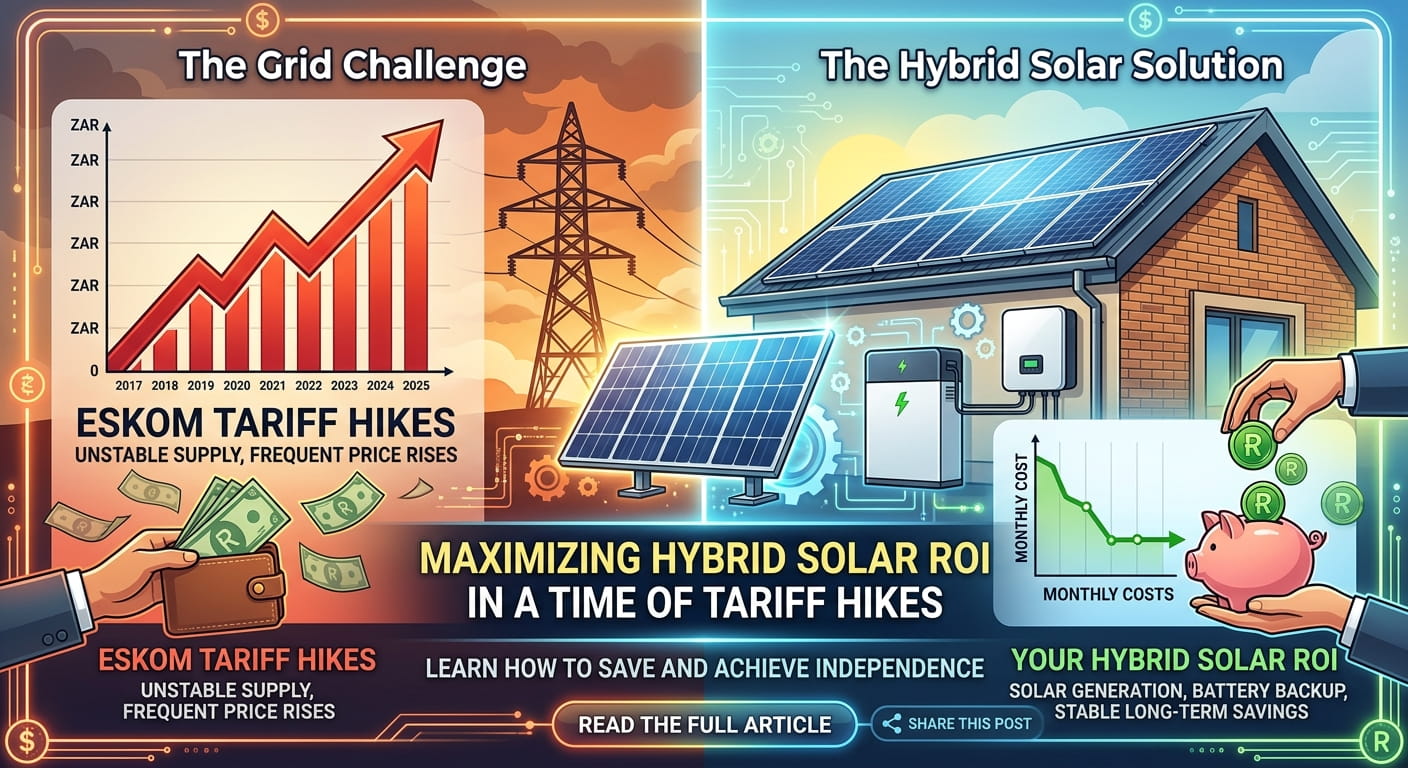
Enabling grid export significantly alters solar financial returns by monetizing energy that would otherwise be lost to solar clipping when batteries are full.
Accelerated ROI Acceleration
Without grid export, once lithium batteries reach 100% capacity, hybrid inverters throttle solar production down to match exact real-time household demand—wasting valuable solar harvesting potential.
By enabling feed-in capabilities:
- 100% Solar Harvesting: Every photon striking your PV panels generates measurable financial value, either by directly powering your home, filling batteries, or earning utility account credits.
- Payback Reduction: Monetizing excess energy can shave 12 to 18 months off overall system payback periods, bringing total capital payback down to under 3.5 years in optimal solar geographic regions.
The table below summarizes the key features of feed-in tariffs:
| scenario | monthlyGridImport | monthlyGridExport | netBillableKwh | estimatedMonthlyBill |
|---|---|---|---|---|
| Standard Household (No Solar) | 600 kWh | 0 kWh | 600 kWh | R 2,100 |
| Hybrid Solar (Self-Consumption Only) | 200 kWh | 0 kWh (Export Disabled) | 200 kWh | R 700 |
| Net-Metered SSEG (With Grid Export) | 200 kWh | 150 kWh | 50 kWh (Offset Applied) | R 275 (Incl. basic admin fee) |

Figure 3: Digital utility billing dashboard reflecting monthly export credits offsetting baseline grid supply charges.
Summary & Key Steps to Enable Grid Export
Feeding power back into the grid is the ultimate step in future-proofing your home energy system and transforming an electricity expense into an asset.
To begin exporting power and earning net metering credits:
- Confirm Inverter Compliance: Ensure your hybrid inverter is listed on the NRS 097-2-1 approved list.
- Submit SSEG Application: File formal Small-Scale Embedded Generation registration forms with Eskom or your local municipality.
- Upgrade Your Meter: Allow the utility or authorized contractors to install an approved bi-directional smart meter.
- Switch to Feed-In Tariffs: Transition your account to an approved time-of-use feed-in tariff (such as Eskom Homeflex) to start earning energy credits automatically.
Would you like to consult with us regarding your home energy needs? Contact us for a no-obligation Chat. We're here to help.
If you know already have something in mind, we might have what you're looking for, please visit Tech and Bids to search for what you need.