When your smartphone screen shatters, your inverter battery dies, or your high-end audio amplifier cuts out mid-session, the immediate goal is simple: get it fixed as quickly and affordably as possible. However, behind the workshop counter lies a critical decision that few technicians explicitly discuss with their clients: the origin and quality tier of the replacement components.
In the South African repair landscape, the market is flooded with a vast spectrum of components ranging from genuine spares directly from original equipment manufacturers (OEMs) to third-party generic parts, lower-grade clones, and outright dangerous fake parts.
Understanding the trade-offs your technician might make—and how those decisions impact the longevity, safety, and performance of your device—can save you thousands of Rands in the long run.

A close-up shot of a repair technician using a microscope to inspect micro-components on a printed circuit board (PCB)
Defining the Spectrum: Genuine, Generic, Clone, and Fake
To navigate the repair market intelligently, consumers must first understand the technical terminology used in the electronics and appliance repair industry:
- Genuine Spares (OEM): Manufactured directly by or explicitly for the original brand (e.g., Apple, Samsung, Sony, Bosch, Victron). These parts meet exact factory tolerances, undergo rigorous quality assurance, and carry full manufacturer backings.
- High-Grade Generic / OEM-Equivalent Parts: Produced by independent third-party manufacturers (often using identical silicon or schematics). While not stamped with the brand logo, reputable generic parts offer comparable performance and electrical safety at a reduced price point.
- Clones: Reverse-engineered components designed to mimic the dimensions and functional output of genuine parts. Quality control can be hit-or-miss, and tolerances are often looser.
- Fake Parts (Counterfeits): Substandard or salvaged components fraudulently labeled and packaged with authentic brand logos to deceive buyers and technicians into paying top-tier prices for bottom-tier quality.
The Technician’s Dilemma: Cost, Availability, and Margins
Why don't repair shops always default to genuine spares? In South Africa, the choice is rarely malicious; rather, it is driven by practical supply chain realities:
- Import Delays & Freight Costs: Sourcing original components from overseas hubs can take weeks and incur heavy customs tariffs, significantly driving up the final repair bill for the customer.
- Component-Level Availability: Major manufacturers frequently restrict access to individual board-level components (like IC chips or power transistors), forcing technicians to seek generic alternatives or donor boards.
- Price Sensitivity: High inflation and living costs mean South African consumers often seek budget-friendly repair quotes. To stay competitive, workshops frequently quote using high-grade generic parts.
However, problems arise when unscrupulous technicians charge the customer for OEM-grade work while secretly installing cheap clones or substandard fake parts.
Comparing Spare Part Tiers: Performance, Risk, and Cost
The table below breaks down the technical, economic, and longevity trade-offs across all four main categories of replacement parts in South Africa:
| Feature / Metric | Genuine Spares (OEM) | High-Grade Generic Parts | Clones | Fake Parts |
|---|---|---|---|---|
| Manufacturing Origin | Certified Brand Factories | Reputable 3rd-Party ISO Factories | Unverified Reverse-Engineers | Counterfeit Operations |
| Component Quality | 100% Factory Specification | 85% – 95% Matching Spec | Variable (50% – 75%) | Extremely Poor / Salvaged |
| Price Point (SA Market) | Premium (Highest) | Moderate (30% – 50% Less) | Low (60% – 80% Less) | Varies (Often marked up as OEM) |
| Failure / Defect Rate | < 1% | 2% – 5% | 15% – 30% | High (> 50%) |
| Safety Risks | None | Minimal | Thermal issues, Voltage Spikes | Fire hazard, Circuit Damage |
| Typical Warranty | 6 to 12 Months | 3 to 6 Months | 30 Days or None | None / Fake Paperwork |
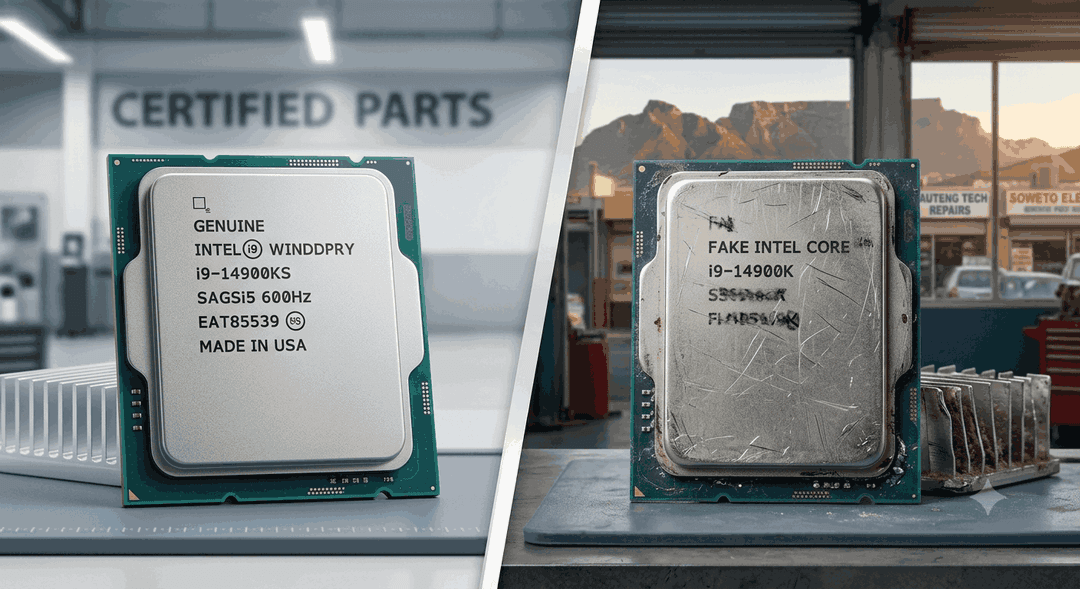
A side-by-side macro photo comparing an original OEM component (clear branding, precise soldering, pristine heat sink) with a counterfeit/fake part
Hidden Trade-offs Every Consumer Must Know
When a technician opts for non-genuine parts without full transparency, several subtle trade-offs occur beneath the surface:
1. Thermal and Power Management Risks
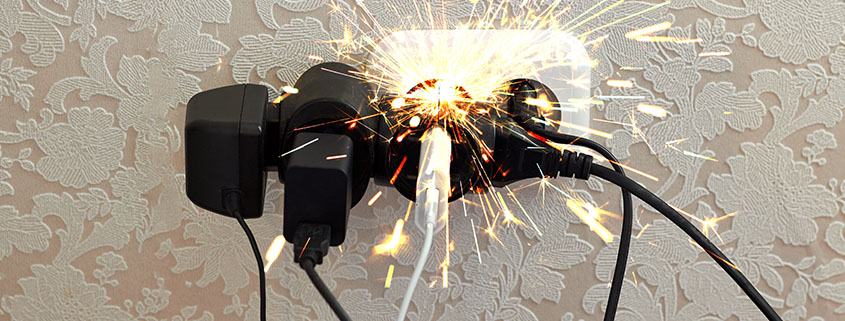
Inferior power MOSFETs, capacitors, or charging ICs found in generic clones often lack thermal throttling capabilities. In high-power devices like solar inverters, gaming laptops, or audio amplifiers, this can lead to premature failure, melted PCB traces, or even fire hazards.
2. Reduced Efficiency and Calibration Drift
When repairing sensitive analog circuits or display panels, clones rarely match original color accuracy, touch response frequencies, or electrical impedance values. An amplifier repaired with low-grade generic transistors may exhibit noticeable audio distortion or bias drift over time.
3. Software Incompatibility and Lockouts
Modern electronics (particularly laptops and smartphones) utilize cryptographic pairing between components. Installing non-genuine screens, batteries, or camera modules can trigger permanent system warnings or disable feature sets like TrueTone, fast charging, or biometric authentication.
How to Protect Yourself: Questions to Ask Your Repair Shop
South African consumer protection laws (under the CPA) demand fair disclosure. Before handing over your equipment, ask your repair specialist these key questions:
- "Are you quoting for genuine spares, high-grade generic parts, or refurbished originals?"
- "Does this replacement component carry a written warranty, and what does it cover?"
- "Will replacing this part trigger software warnings or disable specific features on my device?"
- "Can I inspect the replaced faulty component after the job is completed?"
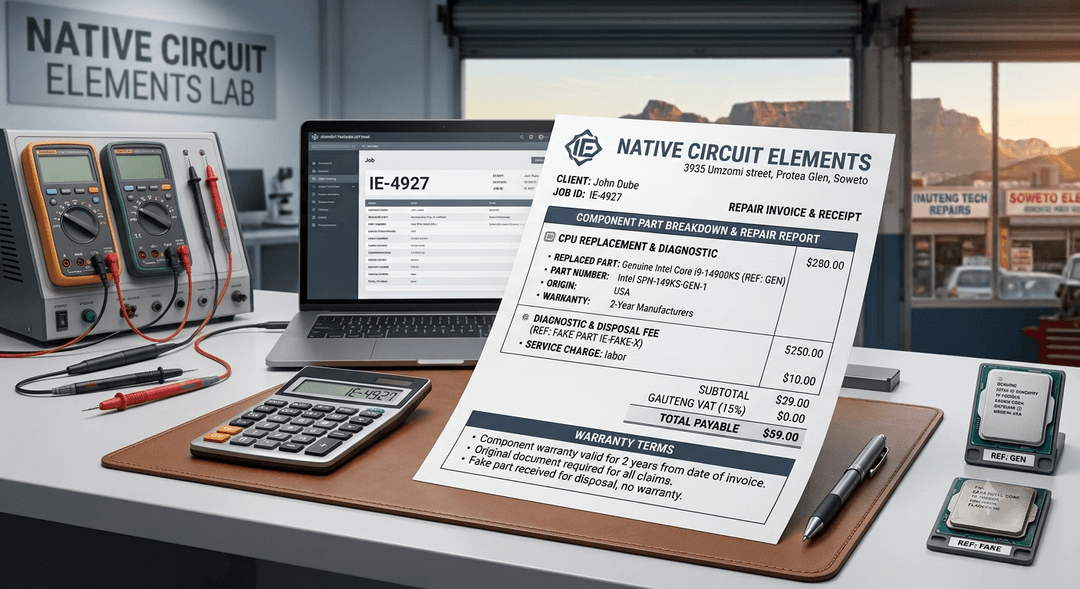
A professional workspace invoice and repair receipt clearly itemizing component part numbers, warranty terms, and origin breakdown.
Final Verdict: When Are Generic Parts Acceptable?
Not all generic parts are bad. For legacy equipment, structural housings, passive components (like standard resistors or switches), or non-critical repairs where genuine spares are end-of-life (EOL), high-quality generic alternatives are a cost-effective lifesaver.
However, for mission-critical power systems, lithium storage devices, display panels, and high-fidelity audio gear, insist on genuine spares or verified OEM-equivalent parts. Always partner with transparent, reputable repair specialists who explicitly detail what goes into your device.
Experiencing a similar issue? Contact us for a no-obligation quote. We're here to help.