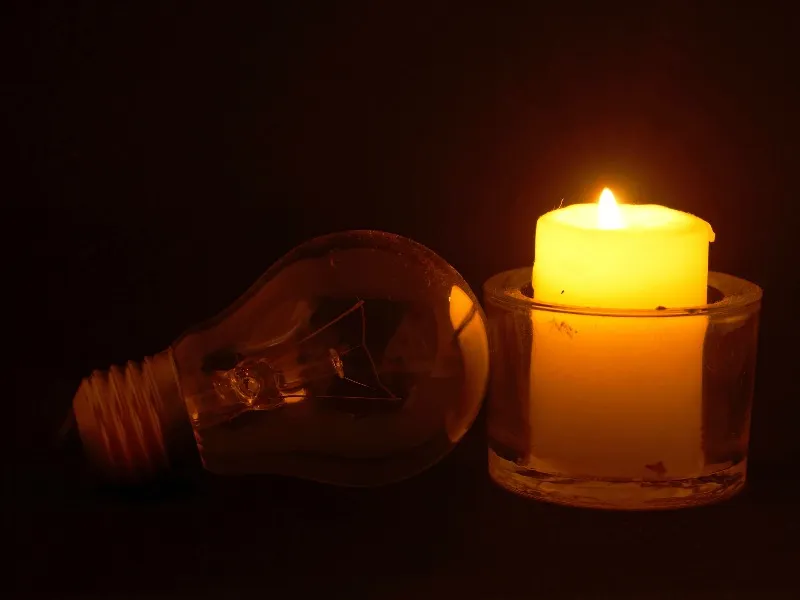
Your TV switches off. The house goes dark. Stage 4, again. Three hours later, the lights flicker—and you hold your breath. When the power returns fully, you pray. Did the surge kill your TV this time?
If you live in South Africa, this isn't paranoia. It's a monthly reality.
The problem isn't just lightning. It's load shedding recovery surges, dirty electricity, and under-voltage events that silently degrade your electronics until they fail. A basic R50 multiplug won't save you. You need proper protection.
This guide reviews the best surge protectors for South African homes, from wallet-friendly plugs to whole-home systems. We'll cover the technical specifications that actually matter in our unique power environment.
The South African Power Problem: Why "Normal" Protection Fails
Before we review products, understand what you're fighting against.
The Three Killers
| Threat | Cause | Effect on Electronics |
|---|---|---|
| Load shedding surge | Power returns unevenly across the grid, creating massive voltage spikes | Instant death of power supplies and mainboards |
| Lightning strike | Direct or nearby strike induces voltage in power lines | Catastrophic failure—no consumer protector guarantees survival |
| Under-voltage (brownout) | Grid struggles to meet demand, voltage drops below 185V | Motors overheat; sensitive electronics malfunction |
Why Standard Surge Protectors Aren't Enough
Most basic surge protectors—the cheap R150 multiplugs—use only MOVs (Metal Oxide Varistors). These devices clamp voltage spikes but do nothing for under-voltage or prolonged over-voltage.
During load shedding, the danger isn't just a spike. It's the voltage fluctuation that happens when power returns unsteadily [citation:4]. A standard MOV-based protector will let unsafe voltage through for milliseconds—long enough to damage sensitive components.
What you actually need: A protector with voltage monitoring and automatic cut-off that disconnects power entirely when voltage leaves the safe range (typically 185V–260V) and only reconnects once stability returns.

The 'Grid Return Surge' – The #1 TV killer in South Africa
Protection Levels: What You Need to Know
Surge protectors are rated by several technical specifications. Here's what matters:
Joule Rating
This measures how much energy the protector can absorb before failing.
- < 500 Joules: Basic protection (phone chargers, lamps)
- 500–1,000 Joules: Adequate for TVs and computers
- 1,000+ Joules: Excellent protection for entire entertainment systems
Clamping Voltage
The voltage level at which the protector activates.
- 300V or lower: Excellent (activates early)
- 400V–500V: Average
- 600V+: Poor (damage may already occur)
Response Time
Measured in nanoseconds (ns) or picoseconds (ps). Faster is better. Look for < 1 nanosecond response time.
Additional Features for South Africa
- Under-voltage cut-off: Disconnects power below ~185V
- Over-voltage cut-off: Disconnects power above ~260V
- Auto-reconnect delay: Waits 2–5 minutes after voltage stabilizes before restoring power
- Status indicator light: Shows when protection is active
Product Reviews: The Best Surge Protectors for South Africa
Category 1: Single-Device Plugs (Best for TVs and High-Value Electronics)
SWD-9001-TVS – Switched TV Surge Adaptor
Price: ~R250–R350
Best for: Protecting a single TV or computer
This unit is specifically designed for South African conditions. Unlike basic surge protectors, it includes automatic voltage monitoring with cut-off at 260V (over) and 185V (under).
Technical Specifications:
- Surge rating: 1,140 Joules | 18,000A total surge current
- Voltage protection: Cut-off at 260V (high) and 185V (low)
- Delay timer: Built-in automatic wait time before reconnection
- Compliance: SANS 164-2, IEC Type N
- Current rating: 6.3A (single device)
Pros:
- Intelligent voltage monitoring (not just surge clamping)
- Timer delay prevents rapid on/off cycling
- Complies with South African standards
- Perfect for protecting a single Hisense TV
Cons:
- Only one outlet
- Limited to 6.3A (fine for TVs, not for high-power appliances)
Verdict: ⭐⭐⭐⭐⭐ Excellent choice for TV protection. The voltage monitoring and timer delay make this superior to basic surge plugs for load shedding environments.

SWD-9001-TVS-surge-protector-plug
Ellies FBWP Surge Plug
Price: ~R139–R259
Best for: Budget-conscious protection with high surge capacity
Ellies is a trusted South African brand. This plug offers six-stage protection using three MOVs and three gas arrestors.
Technical Specifications:
- Clamping voltage: 300V (lowest—activates very early)
- Surge absorption: 16,500A on live/neutral, 13,000A on earth
- Protection stages: 6 (3 MOVs + 3 gas arrestors)
- Features: Built-in mains tester, insurance compliant
Pros:
- Very low clamping voltage (300V) – superior to many competitors
- High surge current capacity
- Built-in wiring tester confirms wall socket safety
- Insurance compliant
Cons:
- No under-voltage protection – only guards against surges
- No auto-reconnect delay for load shedding
- Protects only one appliance
Verdict: ⭐⭐⭐⭐ Great for lightning protection, but pair with a voltage monitor for load shedding safety. The 300V clamping voltage is excellent, but it won't protect against prolonged low voltage.
SurgeMate Inline Surge Protector (SURGEW05)
Price: ~R400–R600
Best for: All-in-one surge + load shedding protection
This unit was engineered specifically for South Africa's unstable power environment. It combines surge protection with load shedding defence in one package.
Technical Specifications:
- HiLo Voltage Protection: Guards against high AND low voltage spikes
- Load Shedding Defence: Designed for grid-return surges
- Automatic Power Cut-Off: Disconnects when voltage is unsafe
- Ground Check on Start-Up: Ensures safe operation
- Capacity: 2400W (10A) – suitable for most electronics
- Warranty: 24 months
Pros:
- True all-in-one solution for South African conditions
- Automatic restoration when voltage stabilizes
- Ground check prevents operation with faulty wiring
- 2-year warranty
Cons:
- Higher price than basic surge plugs
- Not suitable for high-heat appliances (tumble dryers, heaters)
Verdict: ⭐⭐⭐⭐⭐ The best single-device protector for load shedding areas. If you live where stage 4–6 is common, buy this.

Surgemate inline surge protector
Category 2: Multi-Plug Surge Protectors
Lvsun Spike Guard Range
Price: R150–R500 depending on model
Best for: Protecting multiple devices in one location (entertainment center, office)
Lvsun is widely available at Makro and other retailers. The range includes basic spike guards and more advanced surge protectors.
Important note: User reviews indicate some models are "not as strong as expected". Choose higher-joule models (1,000+ joules) for TV protection.
What to look for in Lvsun products:
- Joule rating clearly marked on packaging (avoid models without this)
- Indicator light for surge protection status
- Circuit breaker for overload protection
Pros:
- Widely available
- Multiple outlet options (4, 6, or 8 sockets)
- Affordable entry price
Cons:
- Quality varies by model
- Many models lack under-voltage protection
- Some user reports of disappointing performance
Verdict: ⭐⭐⭐ Buy only the higher-end models with clear specifications. The basic R150 units are fine for phone chargers but not for R10,000 TVs.
Category 3: Whole-Home Surge Protection (Advanced)
Eaton xPole Surge Protector
Price: ~R7,000–R8,500 Best for: Protecting your entire home's electrical system
This unit installs in your distribution board (DB) and protects every circuit in your house. It's a professional-grade solution for serious protection.
Technical Specifications:
- Maximum surge current: 15kA
- Voltage protection rating: 1.7kV
- Mounting: DIN rail (standard DB installation)
- Brand: Eaton (respected industrial electrical manufacturer)
- Compliance: RoHS, IP20
Pros:
- Protects every appliance in your home
- Professional-grade components
- One-time installation, permanent protection
- Ideal for homes with solar inverters or UPS systems
Cons:
- Expensive upfront (R8,000+ installed)
- Requires professional electrician for installation
- Does not protect against under-voltage (only surges)
Verdict: ⭐⭐⭐⭐ Best for new homes or major renovations. Pair with local surge plugs for complete protection. The high cost is justified if you have R50k+ in appliances to protect.

Eaton xpole db surge protector
Clearline Whole-Home Surge Protector
Price: ~R1,500–R3,000
Best for: Budget whole-home protection
Clearline offers more affordable DB-mount surge protection compared to Eaton. Widely available at electrical wholesalers like Communica.
Pros:
- Much more affordable than Eaton
- Easy for electrician to install
- Protects entire home
Cons:
- Lower surge capacity than premium brands
- Fewer technical specifications published
- Still requires professional installation
Verdict: ⭐⭐⭐ Good budget option for basic surge protection. For critical electronics, pair with local protectors.
Protection Strategy: The Layered Approach
No single device provides complete protection. Experts recommend a layered strategy [citation:4]:

Layered surge protection strategy
The Recommended Setup for Different Budgets
Budget (R300–R500):
- Single SurgeMate or SWD-9001-TVS for your TV
- Basic Lvsun multiplug for phone chargers and lamps
Standard (R800–R1,500):
- Ellies FBWP for TV
- Quality surge-protected multiplug (Ellies or Lvsun high-end) for entertainment center
- Individual cheap protector for router
Premium (R3,000–R5,000):
- Clearline DB-mount protector
- SurgeMate for each expensive TV
- Quality multiplugs for all electronics
- Small UPS for router and TV (for watching during load shedding)
Ultimate (R10,000+):
- Eaton DB-mount protector
- Professional-grade local protection at each critical point
- Pure sine wave UPS or inverter system
- Whole-home grounding check and upgrade if needed
Common Myths Debunked
Myth 1: "A surge protector will save me from a direct lightning strike"
False. No consumer-grade surge protector can survive a direct lightning strike. Lightning carries millions of volts. These devices protect against induced surges (voltage created nearby), not direct hits. If lightning strikes your house directly or the pole outside, unplug your electronics if possible.
Myth 2: "All surge protectors work the same"
False. Basic R50 multiplugs offer minimal protection. The key difference is clamping voltage and response time. A protector that activates at 800V has already let damaging voltage through to your TV. Look for 300V–400V clamping voltage.
Myth 3: "Surge protectors last forever"
False. Every time a surge protector absorbs a spike, its components degrade. After one major event (like a nearby lightning strike), the protector may still pass power but offer no protection. Replace your surge protector after any significant surge event. Look for units with status indicator lights—if the light is off, replace it.
Myth 4: "Load shedding only causes surges when power returns"
Partial truth. The return surge is the main danger, but brownouts (low voltage) before the outage also stress electronics. Motors overheat. Power supplies work harder. A good protector guards against both high and low voltage.
Frequently Asked Questions
Q: Can a surge protector prevent damage from load shedding?
A: Yes—but only if it includes under-voltage protection and a reconnect delay. Basic surge plugs only protect against spikes, not the voltage fluctuations that occur during load shedding recovery. The SurgeMate and SWD-9001-TVS are specifically designed for this.
Q: Will a surge protector let me watch TV during load shedding?
A: No. Surge protectors don't provide power—they only clean and protect it. To watch during load shedding, you need a UPS or inverter with battery backup.
Q: How do I know if my surge protector is still working?
A: Look for an indicator light. Most quality protectors have a green LED showing that surge protection is active. If the light is off or red, the internal components have degraded and the unit needs replacement.
Q: Do I need a surge protector for my router?
A: Yes. Routers are sensitive electronics that operate continuously. Load shedding surges frequently damage routers, leading to connectivity issues. A small, cheap protector is worthwhile.
Q: Are expensive surge protectors worth it for a cheap TV?
A: Use the 50% rule. If your TV cost R4,000 and a good surge protector costs R400 (10% of TV value), it's worth it. If your TV cost R1,500 (second-hand small unit), a R400 protector may not make financial sense.
Summary: Our Top Picks
| Product | Best For | Key Feature | Price Range | Rating |
|---|---|---|---|---|
| SurgeMate SURGEW05 | Load shedding protection | HiLo voltage monitoring + auto cut-off | R400–R600 | ⭐⭐⭐⭐⭐ |
| SWD-9001-TVS | TV protection | Voltage cut-off + timer delay | R250–R350 | ⭐⭐⭐⭐ |
| Ellies FBWP | Lightning protection | 300V clamping voltage | R139–R259 | ⭐⭐⭐⭐ |
| Eaton xPole | Whole-home protection | 15kA surge capacity | R7,000–R8,500 | ⭐⭐⭐⭐ |
| Lvsun (high-end) | Multiple outlets | Widely available | R300–R500 | ⭐⭐⭐ |
Final Recommendation
For most South African households with a Hisense TV worth R5,000+:
Buy the SurgeMate SURGEW05 or SWD-9001-TVS. These units cost R250–R600 and provide the specific protection needed for load shedding environments: voltage monitoring, automatic cut-off, and reconnect delay. They will pay for themselves the first time they save your TV from a grid-return surge.
For the ultimate protection setup:
- Install a Clearline or Eaton DB-mount protector (R1,500–R8,000 installed)
- Plug your TV into a SurgeMate (R400–R600)
- Plug your router and decoder into a quality surge multiplug (R300–R500)
- Consider a small UPS (R1,500–R3,000) for watching during load shedding
Don't wait until after your TV dies. The next stage 4 blackout is coming. Protect your electronics today.
Need a replacement mainboard or power board because your TV wasn't protected? We have your back.** We have tested, certified Hisense parts with a 30-day guarantee.
Experiencing a similar issue? Contact us for a no-obligation quote. We're here to help.