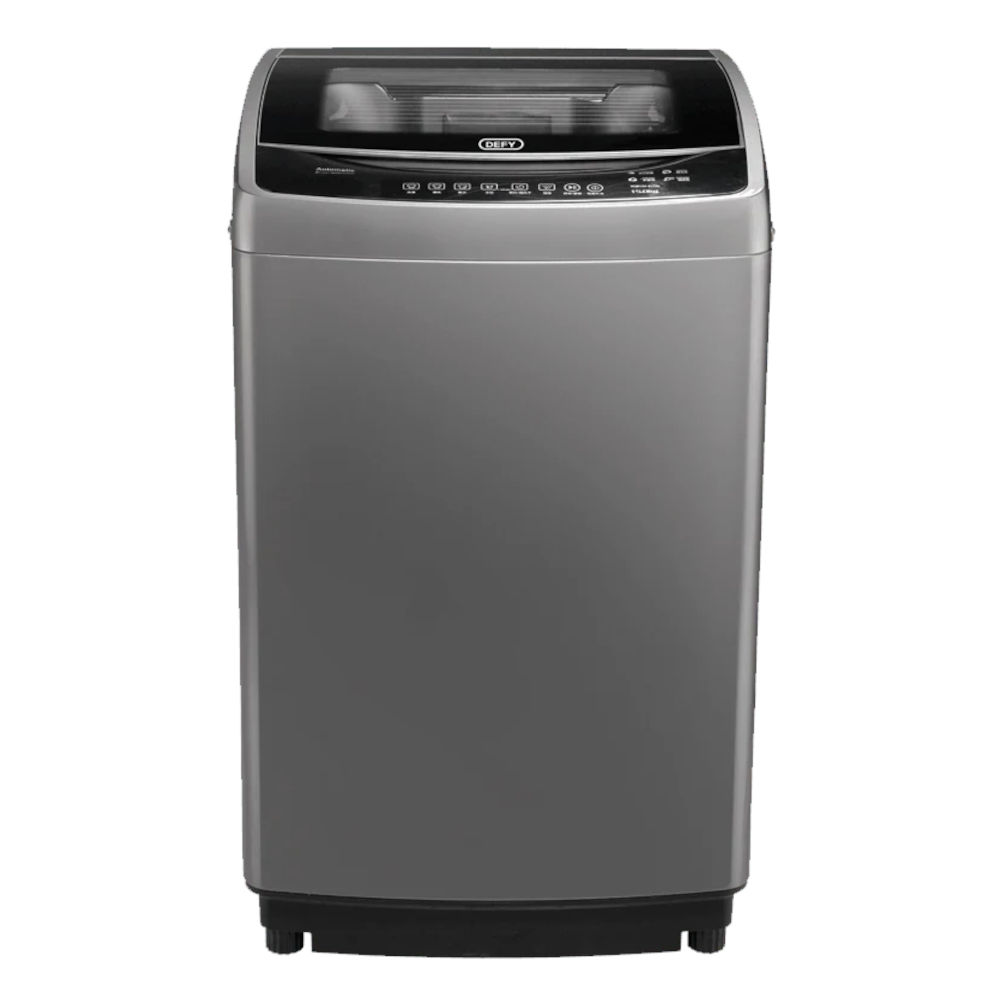
The Diagnosis
When a high voltage surge hits a refrigerator, the power supply section of the main control PCB is almost always the first casualty. In this case, the Defy fridge was completely unresponsive—no lights, no compressor, no display. This indicated a primary side power supply failure.
After removing the control board from the unit located at the back of the fridge, a visual inspection revealed that the flyback controller IC was burned out, and the fuse was open. This pointed to a short circuit deep within the switching supply.
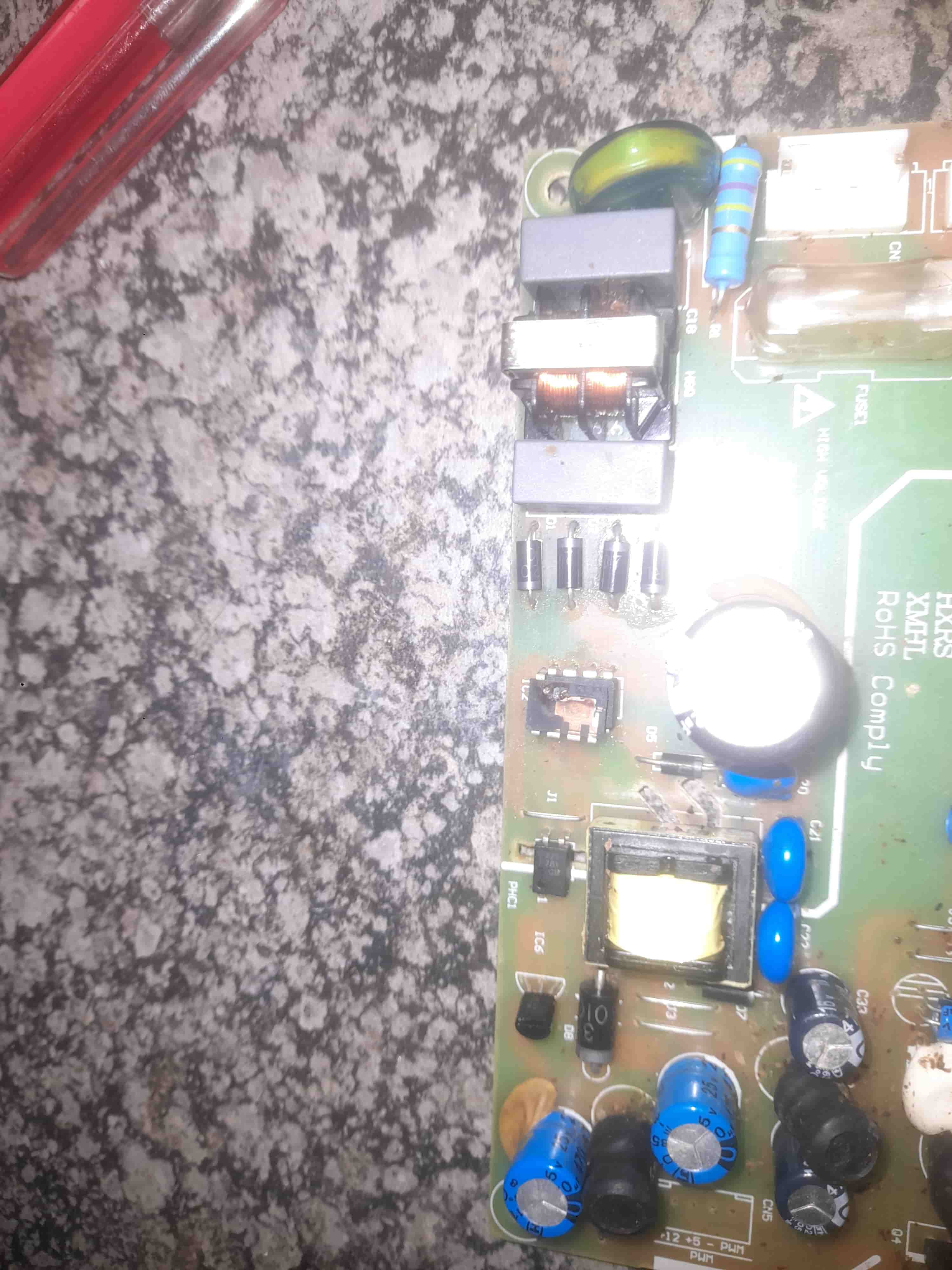
Defy fridge control board - front view.
Component Analysis
The power supply on this Defy board follows a standard flyback topology. The two critical components that typically fail during a surge are:
- The Bridge Rectifier (BR1): Converts AC mains to high-voltage DC. A spike usually blows this into a short circuit.
- The Flyback Controller IC (U1): The PWM chip that drives the main switching transistor. Surges often couple through the transformer and destroy the IC's driving pins or the internal MOSFET.
After desoldering the suspect components and testing them with a multimeter, the diagnosis was confirmed:
- Bridge Rectifier Diodes: Short circuit between AC inputs and DC outputs.
- Flyback Controller: Short between the VCC and GND pins.
Safety Warning: Switch-mode power supplies contain high-voltage capacitors that can > hold a lethal charge for a long time. Always discharge the large primary capacitor (usually 400V rated) with a high-wattage resistor before touching any part of the circuit.
The Repair Process
1. Removal
Using a desoldering gun and wick, I removed the faulty bridge rectifier (D3SB60) and the flyback controller IC. For the IC, which was an 7-pin DIP package, using a solder sucker was essential to clear the holes without lifting the pads.
2. Sourcing Replacements
Finding the exact match for the controller IC is crucial. The marking on the original chip was "TNY279P". This is a common current-mode PWM controller.
- New Bridge Rectifier Diodes: Generic RL207 (1A, 1000V) were selected as they matched the specifications of the original diodes.
- New Controller IC: TNY279P (DIP-7 package).
3. Installation
Before soldering the new components in, I checked the solder pads for any bridges or lifted traces. The IC socket was optional, but I installed a machined pin socket for the IC to make future troubleshooting easier (if any). The bridge rectifier was soldered directly to the board, ensuring the polarity marking matched the silkscreen.
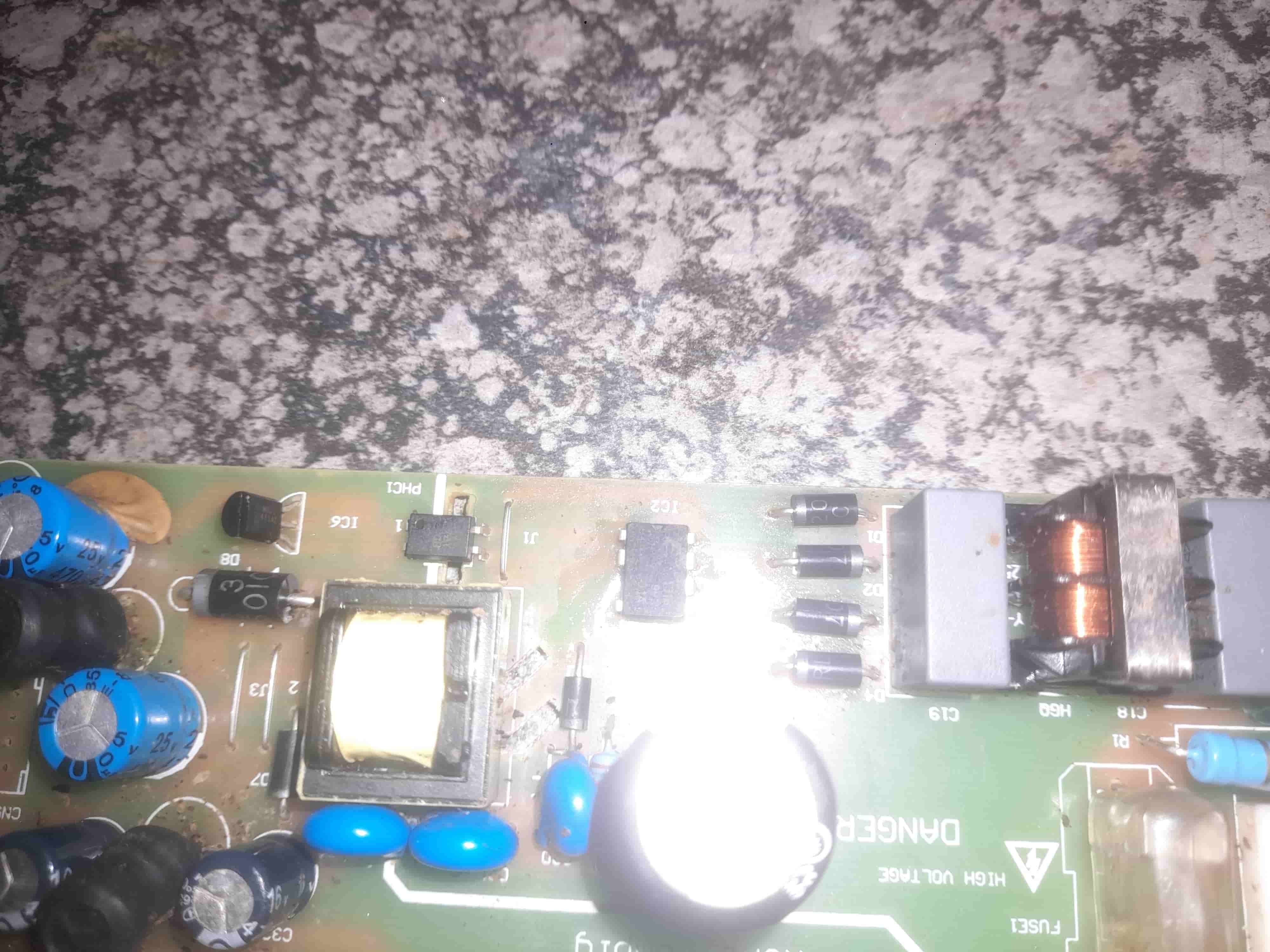
New components soldered onto the PCB.
4. First Power On
With the new parts in place:
- I visually inspected for solder bridges.
- I checked resistance across the AC input to ensure the bridge wasn't shorted.
- I used a dim bulb tester (series incandescent bulb) to power the board for the first time.
The bulb flashed briefly and then dimmed, indicating the short was cleared and the supply was trying to start. A quick voltage check on the output capacitors showed a steady +12V and +5V.
Schematic Snippet (For Reference)
Here is the basic layout of the primary side of the circuit we repaired:
AC Live --->| |---+
                  |
AC Neutral -->| |---+----> [Bridge Rectifier] +----> +HV
                        |                       |
                        +----> [Bridge Rectifier] -----> GND (Primary)
                                   |
                              [Flyback Transformer]
                                   |
                              [OB2263 Controller]
                                   |
                              [Current Sense Resistor]
Final Thoughts
Repairing electronic pcb's can be dangerous, If you're uncomfortable with DIY repairs, consider consulting us for a professional repair.